

Event Networking
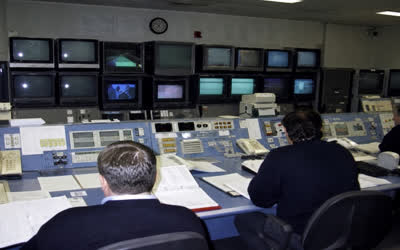
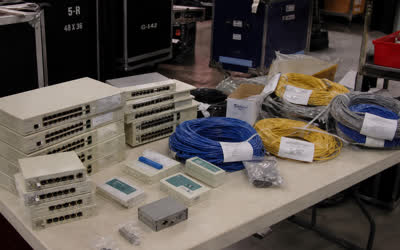
Some events now need data almost as much as they need power. Box offices want live sales and guest-list reconciliation, accreditation desks want printers that respond promptly, production offices want e-mail, press rooms want a shared connection, and sponsors with a hospitality enclosure generally expect their guests to be able to use it. MGH therefore supplies temporary event networking as a managed service rather than as a loose collection of access points and switches handed over at the start of the day.
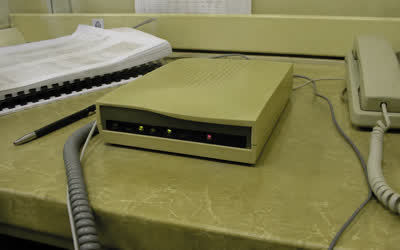
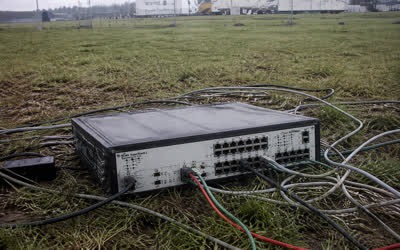
A standard SITEPOINT™ deployment begins with a wired core in GOLDCELL, a segregated operations network for production traffic, and separate hotspot service for box office, traders, exhibitors, press and public users where the brief warrants it. Backhaul is taken either from the venue's fixed line after an acceptable line test, or by licensed microwave hop to the nearest building that can provide one. Public hotspot traffic is rate-limited, and payment terminals are kept on their own VLAN rather than placed on the same flat network as public internet users.
Typical deployment points
| Typical node | Normal provision | Notes |
|---|---|---|
| Accreditation cabin | 2 wired drops, 1 printer port, 1 protected hotspot cell | Badge stock and photo upload share a local switch, not a public channel. |
| Box office | 4 wired tills, standby WiFi bridge, receipt printer support | Primary circuits remain cabled because tills and receipt printers behave more consistently that way. |
| Press tent | 24-client hotspot, 2 shared laser printers, timed guest credentials | Large image uploads are shaped after 18:00 so that filing copy still beats the first encore. |
| Sponsor village | 3 hotspot cells, 1 help desk handset, 1 managed switch | Coverage is surveyed after the refrigeration trailer has been parked, not before. |
| Public internet cafe | Up to 40 kiosk ports or 60 concurrent hotspot users | Session timeouts are published on the welcome screen for managed public use. |
Backhaul, segregation and practical limits
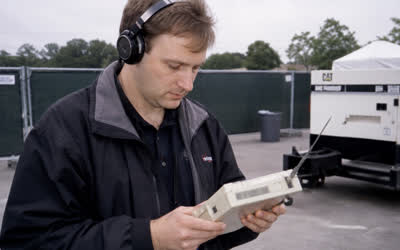
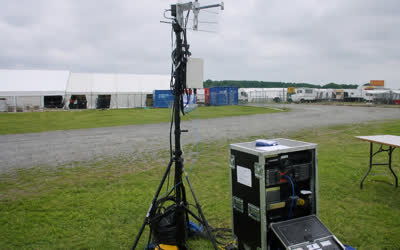
Access points are mounted where the crowd and the weather permit, usually on lighting towers, cabin roofs or scaffold goalposts already in the build plan. We survey after steel, stage roof and refrigerated vehicles are in position, because each can affect 2.4 GHz coverage. Where the event already uses our Power & Distribution team, hotspot cabinets are held on UPS for orderly failover; where it uses our Temporary Structures team, mast loading and wind exposure are signed off before the first directional panel is raised. The service is available in 802.11b or mixed 802.11b/g mode according to client device age, which in conference work can still be a practical constraint.
The operating rule is simple. Anything that opens gates, prints passes, processes cards, carries incident traffic or keeps the production office moving is treated as work traffic first and internet traffic second. The hotspot welcome page is therefore a secondary concern. Core switching remains in the control room, patching is labelled on both ends, and every cable route that crosses public space is agreed with Crowd Safety & Security before the system goes live.
A short policy on passwords. MGH will issue a printed hotspot key, rotate it when asked, and keep a written issue log for managed networks. We do not secure an operations network with the event name, the organiser's mobile number or the word "festival". Those remain among the first combinations anyone would try.
The public demonstration version of our drawing tool appears on Network Planner. It opens in a full-screen modal, allows the user to sketch one or more fields, and then generates a map with T1 demarcation points, Inmarsat trailers and several UTP runs.
Promotional uplink speed test
Prospective clients may use this public demonstration to test the apparent quality of the uplink back to our servers. It resembles the sort of dashboard used by consumer broadband test sites, while reflecting the modest throughput that a shared event circuit may show under controlled conditions.
| Test item | Gauge | Reading |
|---|---|---|
| Download | 0.00 Mbps | |
| Upload | 0.00 Mbps | |
| Latency | 0 ms | |
| Line verdict | Awaiting demonstration. | |
Demonstration readings are promotional and intended to illustrate a managed public-event service rather than provide a certified technical measurement.
Networking assignments are commonly delivered alongside Sound Reinforcement, because events that need radio co-ordination often need dependable data service as well. Requirements, site plans, fixed-line details and the approximate number of expected users should be sent through Contact Us.
Page last updated 10 August 2003. Prepared by Production Systems.
